vibe coding a sewing helper app
Seamless: AI Sewing Pattern Generator
ROLE
focus
timeline
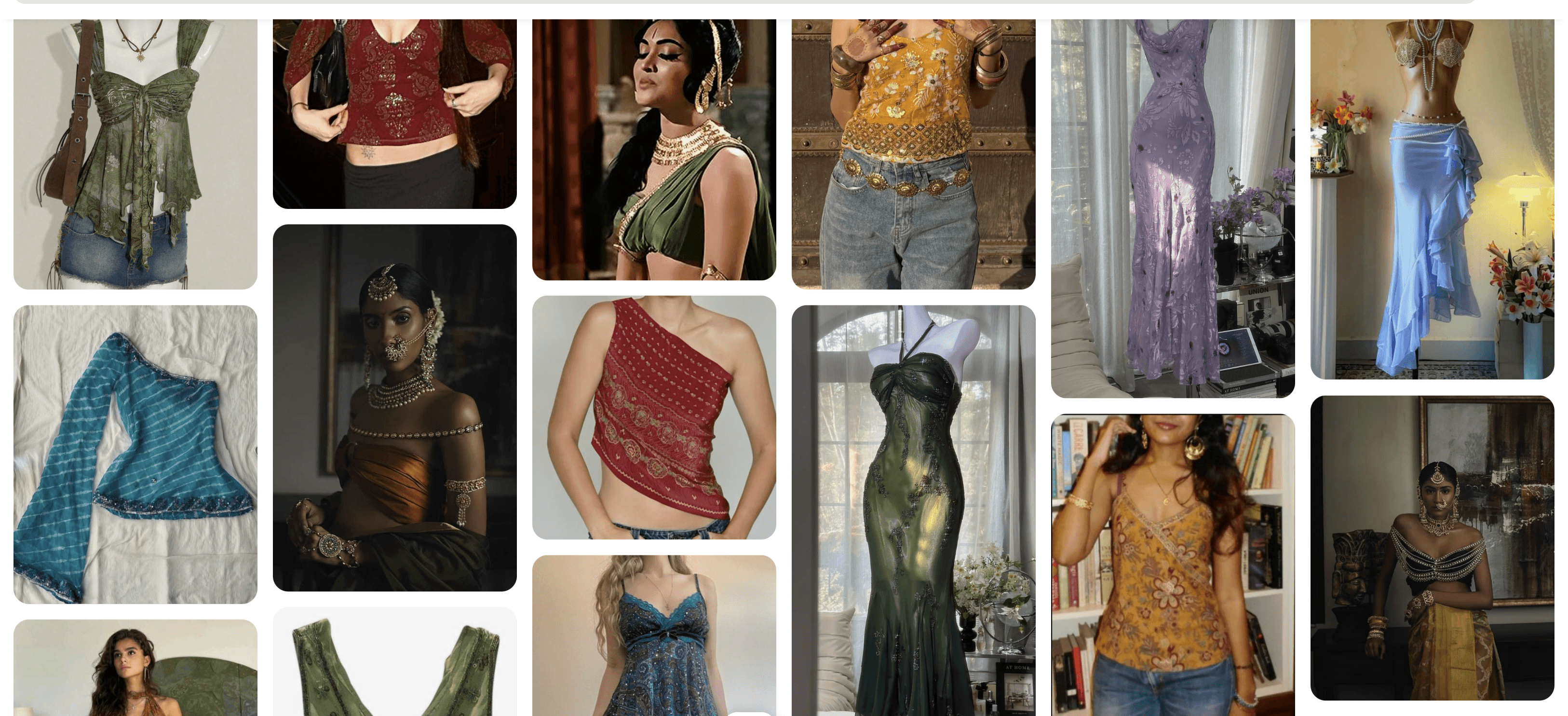
"When I sit down to sew, I don't know how to make what I envision. I spend hours scouring for similar patterns online that don't quite match."
Understanding the gap
I conducted 2 formal interviews with home sewers (beginner and intermediate levels), supplemented with 5 informal conversations. The research revealed systematic barriers preventing sewers from translating inspiration into finished garments.
Terminology is a barrier for beginners
Sewers use phrases like 'the flowy part' instead of technical terms. Pattern instructions assume knowledge beginners don't have.
Material choice is critical but confusing
Multiple project failures from wrong fabric choices. Patterns give vague recommendations while fabric drastically affects construction and appearance.
Commercial patterns don't match inspiration
Hours spent searching for patterns, settling for 'close enough' options at $15-30 that require modification anyway.
Community support is invaluable
All participants active in online communities. Peer validation trusted more than company descriptions.
My role
Working with a four-person team, I led the research end-to-end and drove the core product design — from the first interview through the final prototype.
Research — wrote the methods plan and interview script, then ran both rounds of interviews and usability testing.
Design — designed and built every hi-fi screen in Figma, from onboarding through the dashboard rebuild.
The pivot — round one testing surfaced a weak value prop and an overloaded dashboard; I led the redesign that fixed both.
The demo — wrote and edited the walkthrough video we used to pitch the prototype to our sponsor.
Round one → round two
Unclear value prop on screen one
Onboarding disconnected from the dashboard
Dashboard read as overload
Led with what Tether does, before asking for data
Onboarding now points directly at dashboard elements
Insights surface first; raw data is progressive
Navigation rated 8–9/10 in round two, with plain-language insights called out as the strongest part of the experience.
We handed the sponsor a working prototype now headed toward HIPAA review and an App Store launch. I'm staying on as her UX consultant through that build.
A capstone project with a four-person team for sponsor Cassie Chase, advised by Clare Hegg — University of Washington Information School.
AI as your knowledgeable sewing assistant
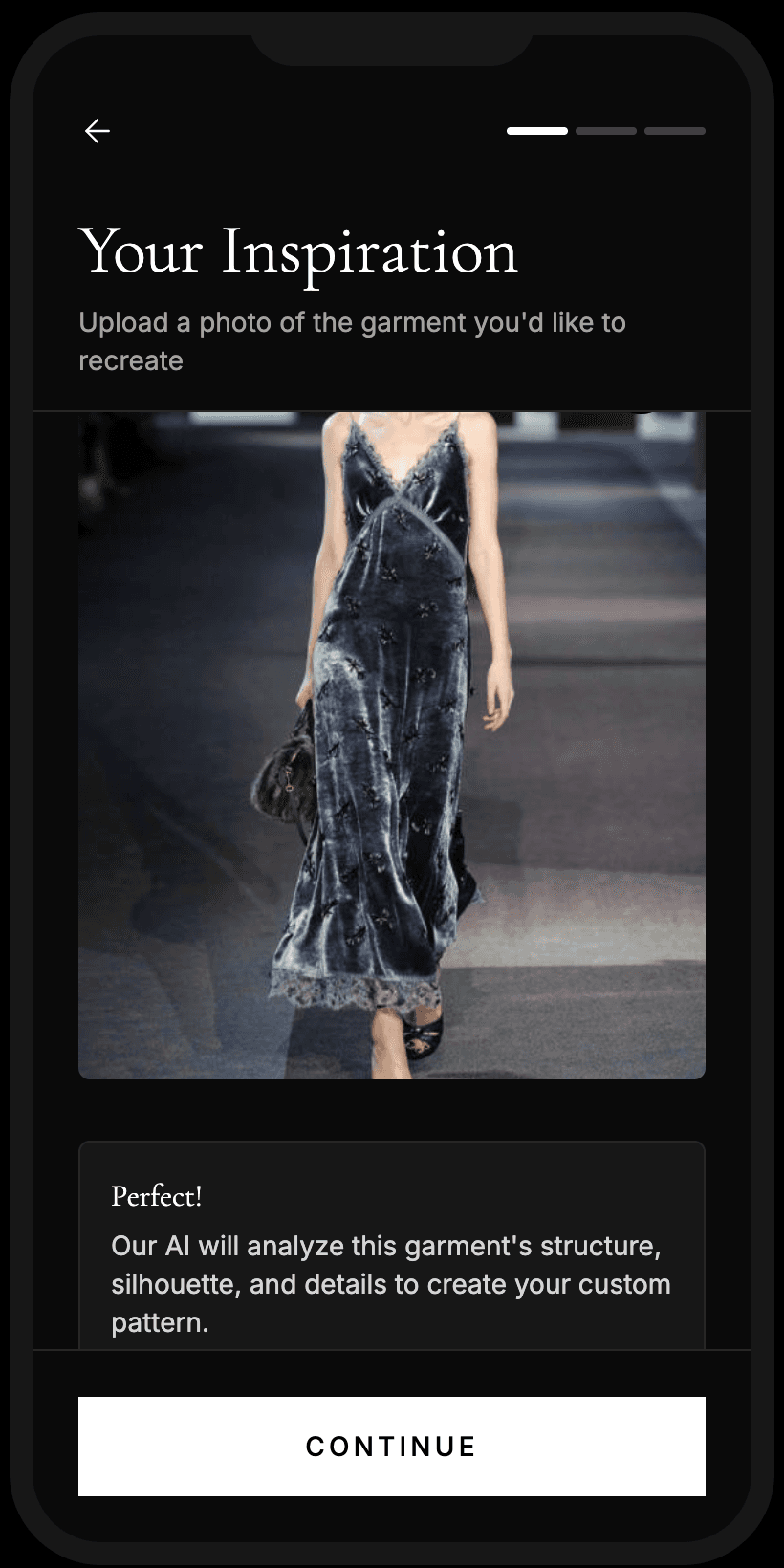
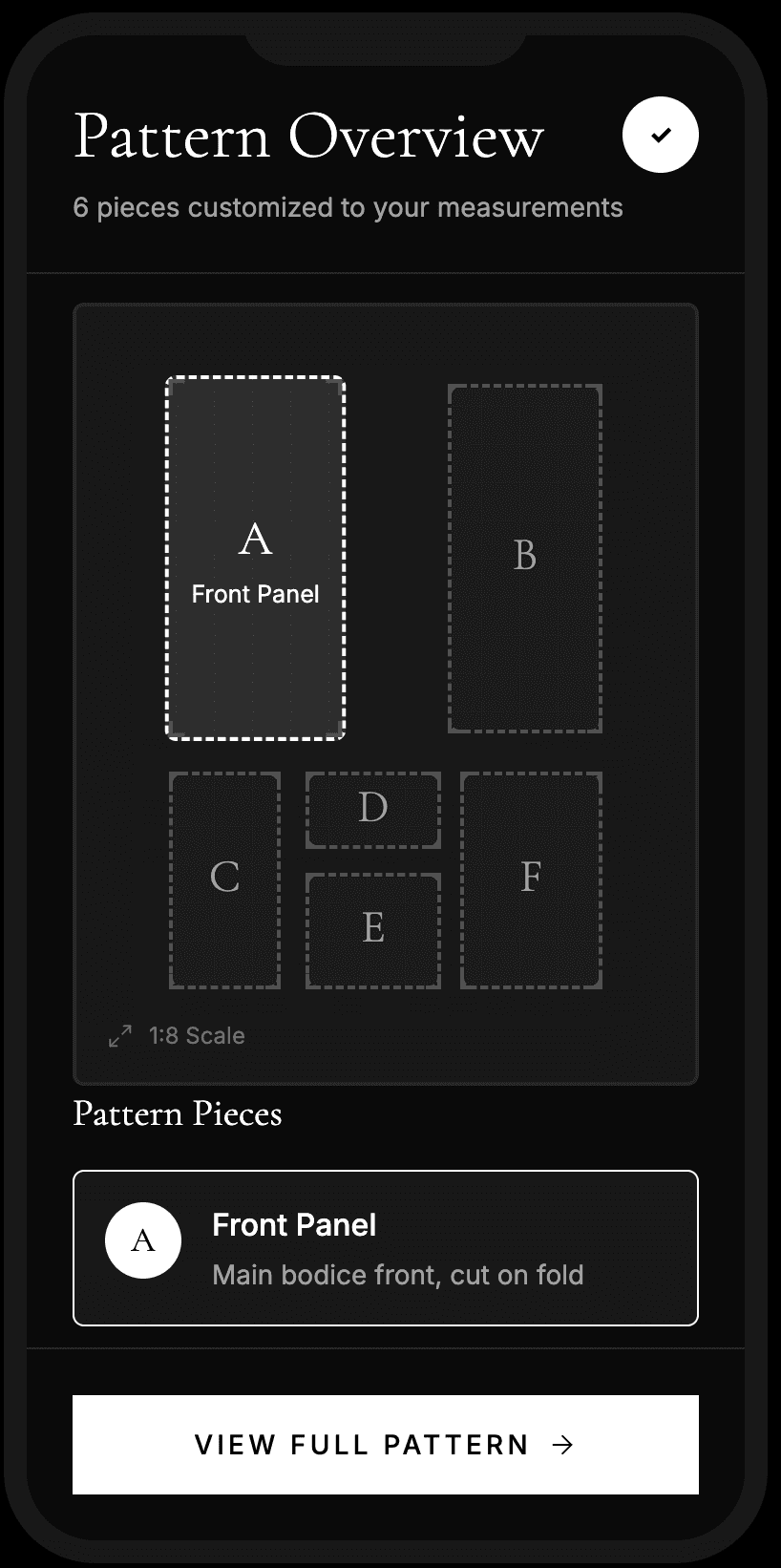
SEAMLESS analyzes inspiration photos and generates custom sewing patterns - but it's more than just pattern generation.
→ Teaches terminology contextually
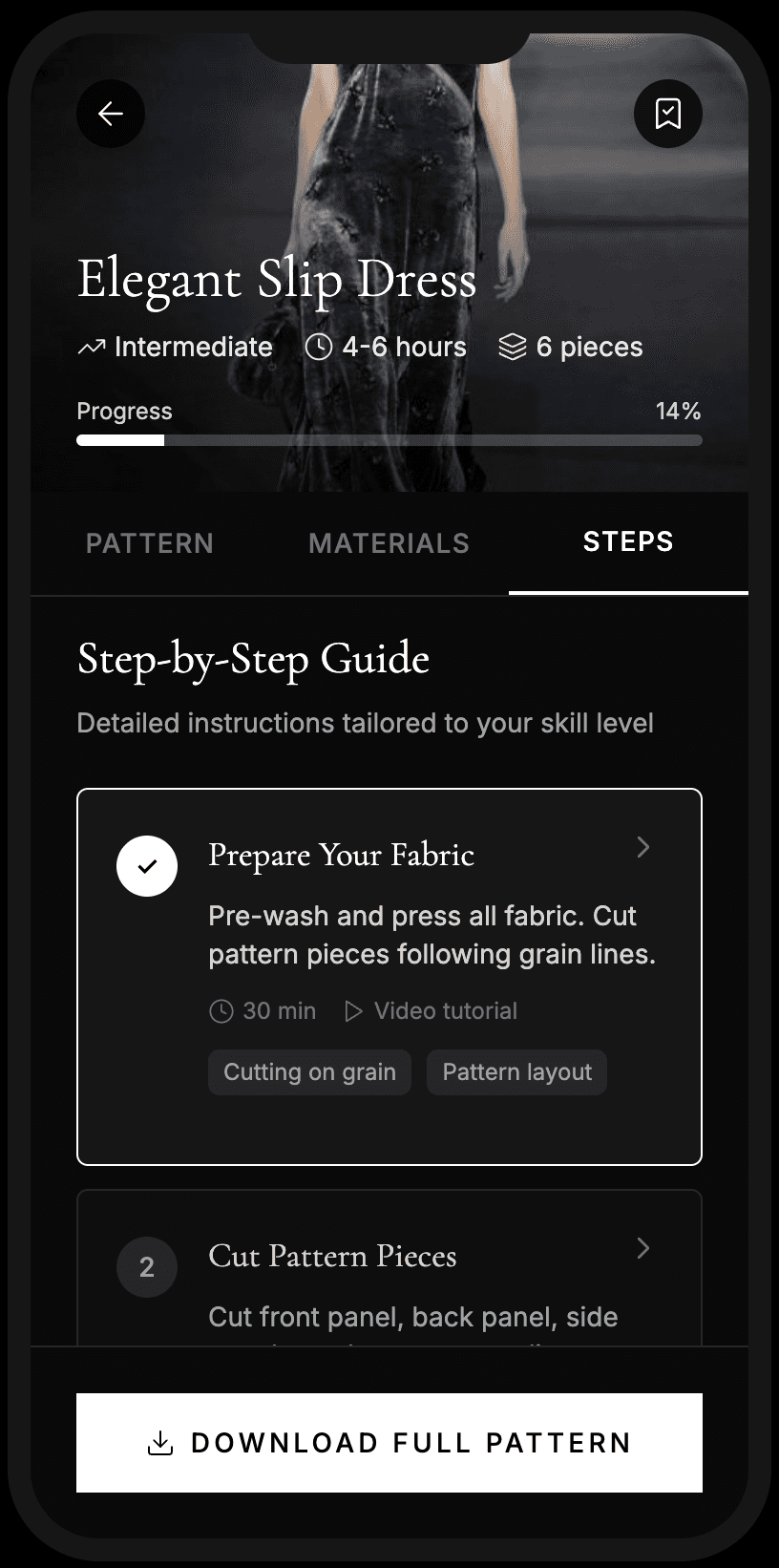
→ Provides material recommendations with rationale
→ Connects sewers with community support
The AI offers expertise and possibilities, but you make every decision. Your vision, your choices, your garment.
Design Principles
Collaborative AI
Position as knowledgeable assistant, not authoritative expert. Users retain creative control.
Progressive Disclosure
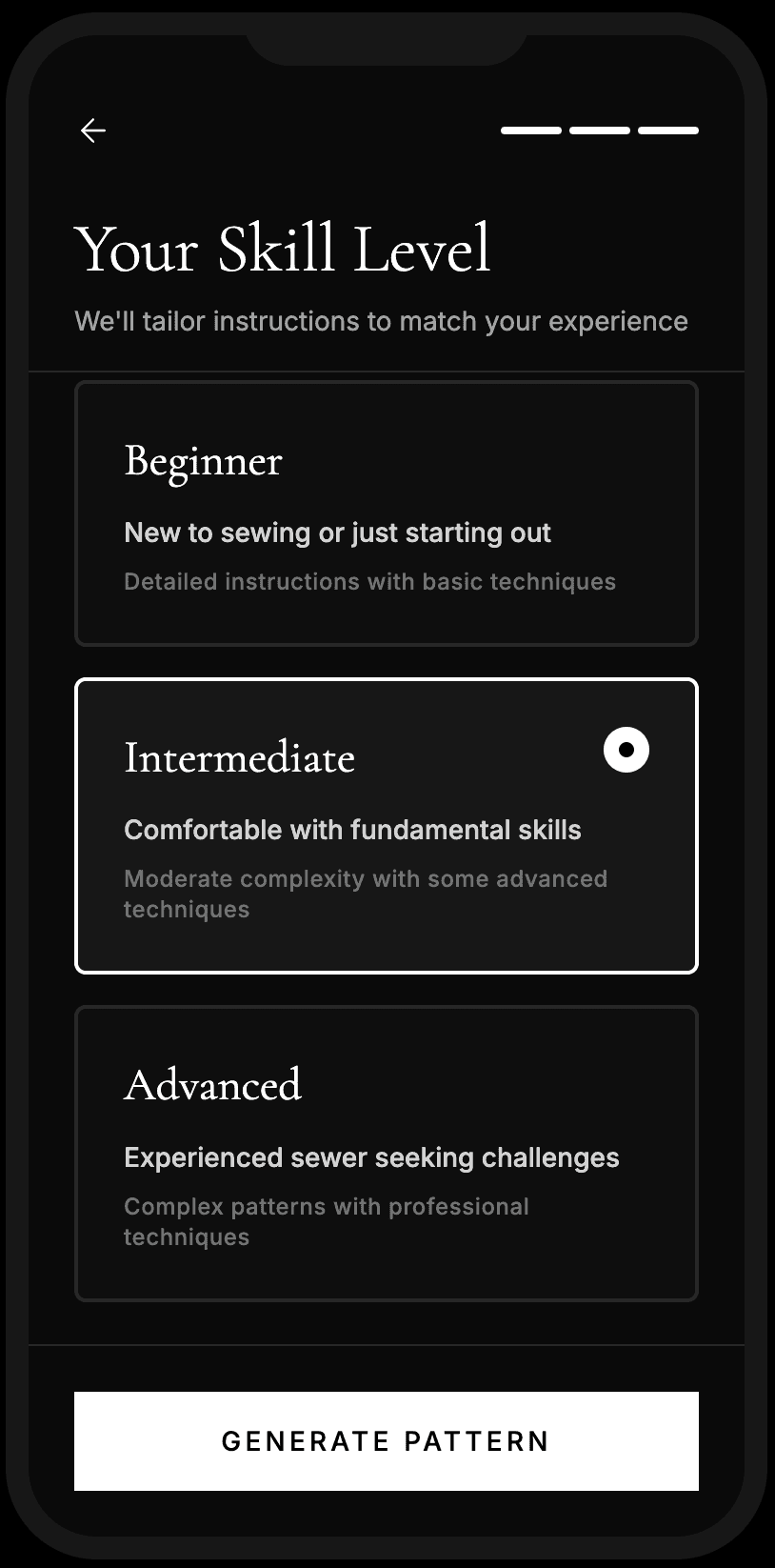
Reveal complexity gradually based on user needs and skill level.
Contextual Education
Teach terminology and techniques where they're needed, not in separate glossaries.
Community-Driven
Integrate peer validation and shared knowledge throughout the experience.
User Flow
Inspiration
Measurements
Skill Level
Generation
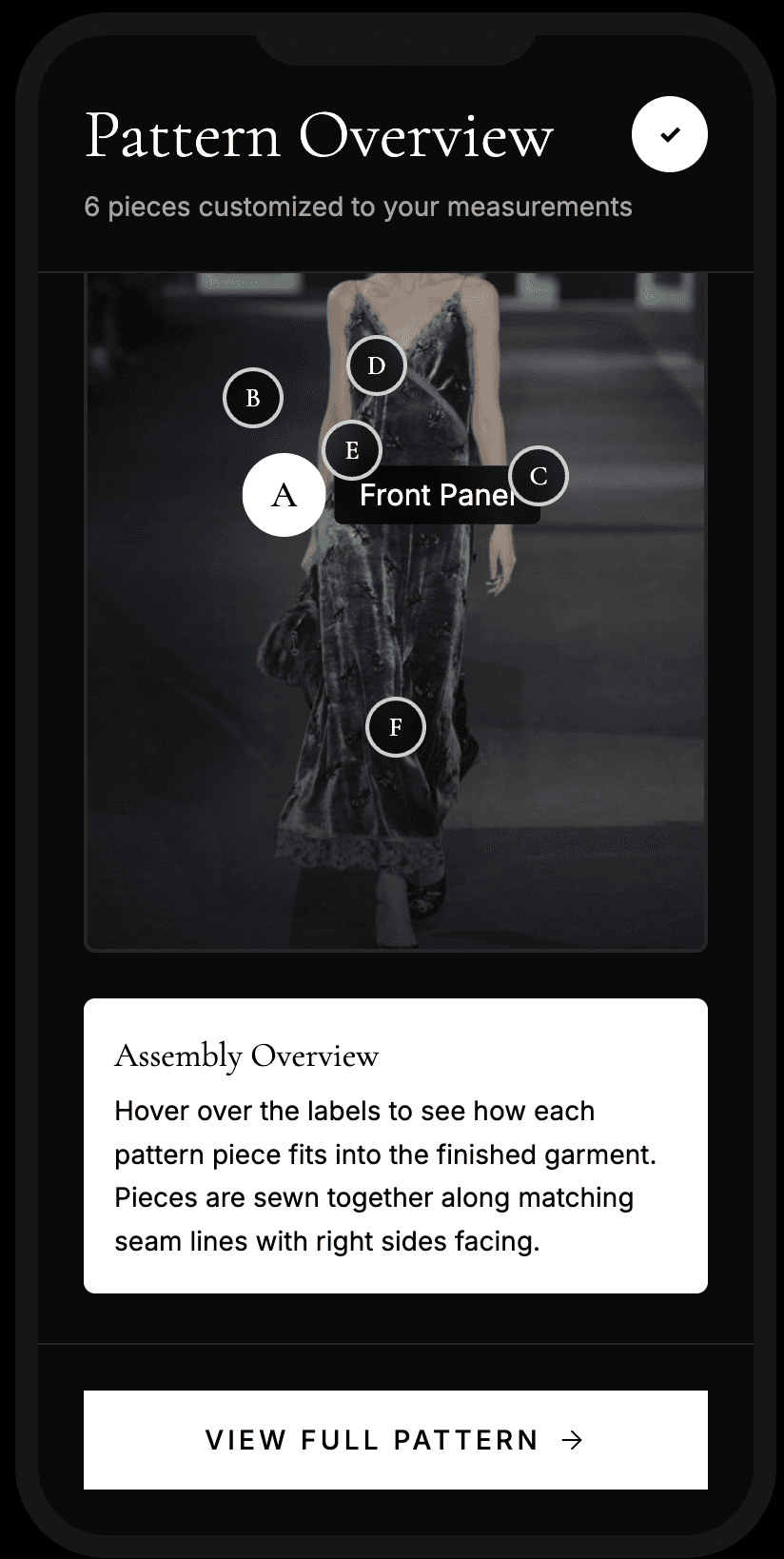
Pieces
Assembly
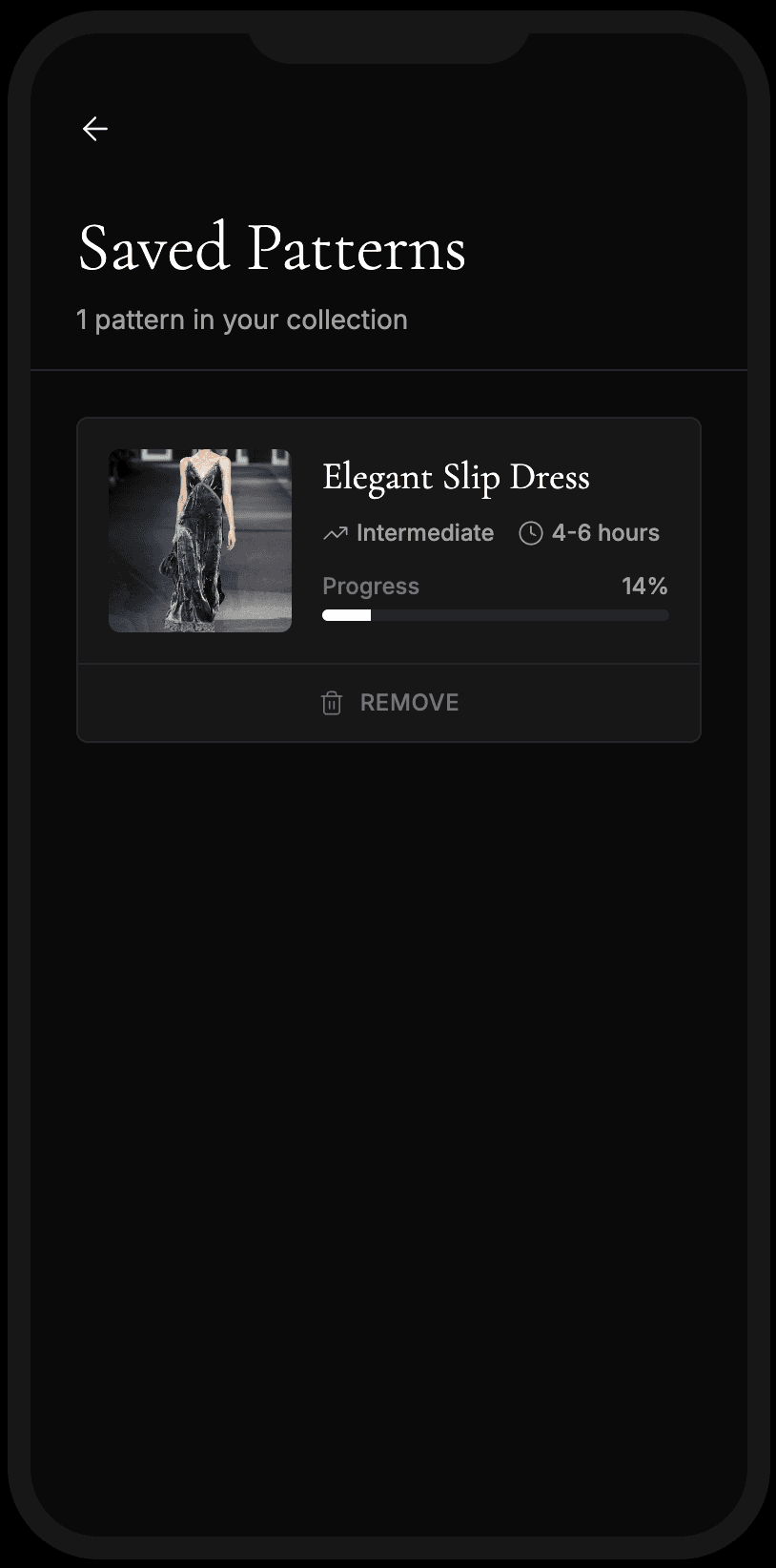
Progress
What this project taught me
Systems Thinking Reveals Complexity
Designing every screen forced me to consider AI implementation, data flow, and backend requirements—not just surface interactions.
Feasibility Defines Direction
I researched AI training for garment recognition and pattern generation. Understanding feasibility helped me scope features appropriately.
Transparency Builds Trust
Learned to position AI as collaborative assistant through clarifying questions, transparent limitations, and progressive disclosure.
Constraints Force Prioritization
Limited time meant choosing between breadth and depth. Focusing on core flows over edge cases resulted in a more cohesive solution that addressed real pain points effectively.