designing with ai for personal wellness
Luelle: AI Therapy Companion
ROLE
focus
timeline
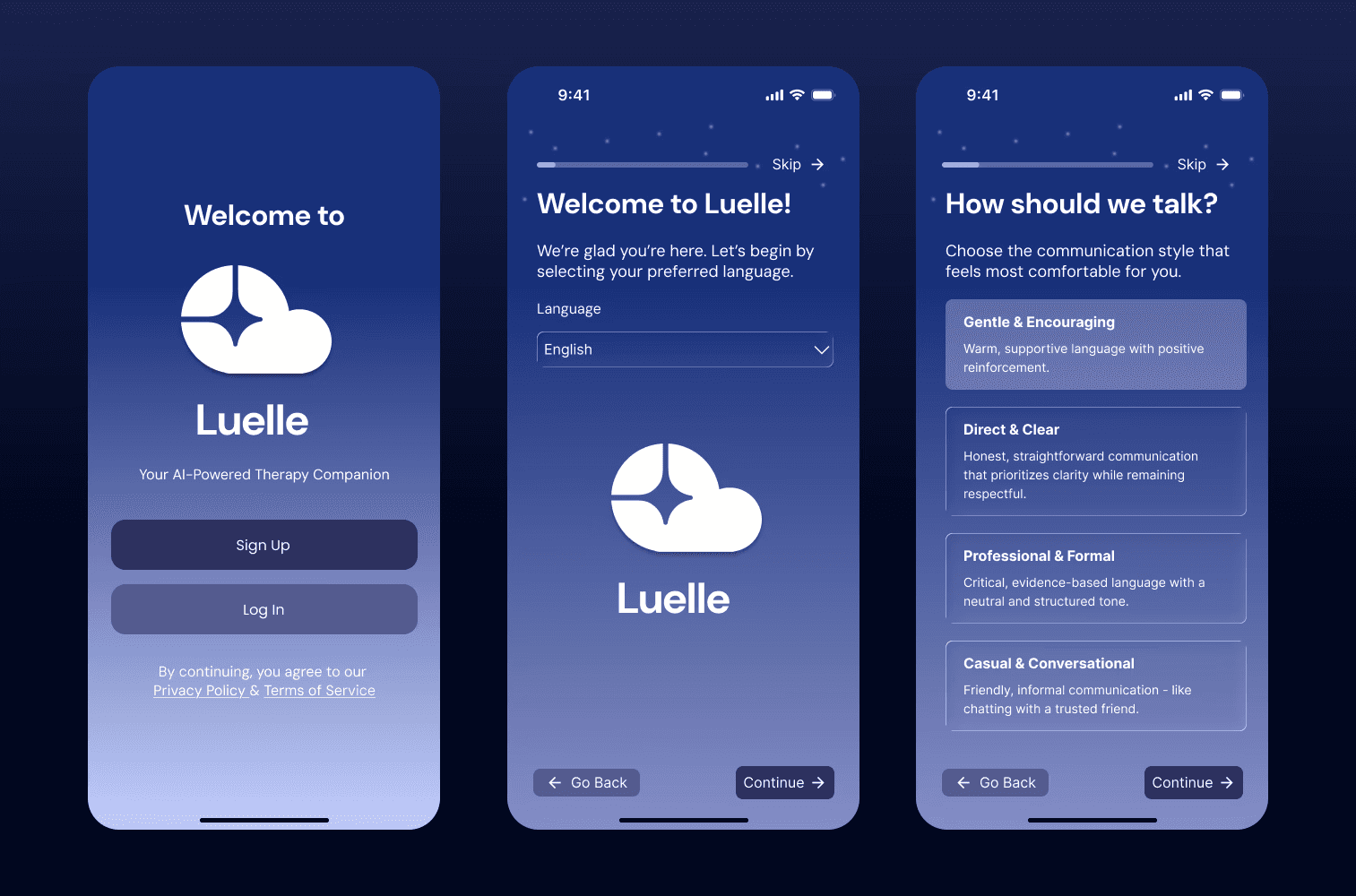
Luelle is an AI-powered therapy companion providing on-demand mental health support with human care connections.
Defined Value Prop
Refined User Flows
Built Design System
The Problem
Access to mental health care is limited by high costs, long waitlists, and therapist shortages, leaving many without the support they need.
Challenge
How might we make high-quality mental health support accessible, affordable, and timely?
Design an experience that empowers users to access affordable mental health support exactly when they need it, while preserving empathy and trust.
The digital mental health market is worth billions, yet many products remain inaccessible, impersonal, or disconnected from real therapists - resulting in over 70% of users abandoning them within just two weeks.
Market gap analysis revealed value for a hybrid approch but top apps lack affordable consumer-first AI with human therapist oversight.
| App | Pricing | Strengths | Weaknesses | Market Opportunity |
|---|---|---|---|---|
| Wysa | $99/yr | HIPAA and GDPR compliant, AI + therapist escalation | B2B-first, complex onboarding, expensive | Simpler consumer-direct model at lower cost |
| Spring Health | Employer-sponsored | Smart therapist matching | Corporate-only | Individual access, lower cost |
| Lyra Health | Employer-sponsored | AI triage → clinician | Enterprise focus, waitlists | No corporate gatekeeper |
| Talkspace | $69-109/wk | Live therapy + secondary AI support | High cost + less AI depth | Affordable AI-first entry |
Wysa
Spring Health
Lyra Health
Talkspace
Market research revealed high churn and accessibility challenges, so we conducted user interviews to identify pain points and explore attitudes toward AI-powered mental health care.
Key Takeaways
Mental health care is expensive and inaccessible: High costs, long waitlists, and therapist shortages are real barriers.
Stigma remains a significant barrier, especially around seeking help and disclosing mental health struggles.
Users want AI to complement human care, not replace it - they value accessibility and do not want to lose the empathy and expertise from real therapists.
Privacy and data security are top concerns when using AI for mental health support.
We conducted a SWOT analysis to identify how Luelle can leverage its hybrid AI-human model to address gaps in the mental health market.
Strengths
Hybrid model of AI + human therapist
24/7 support at lower cost
Scalable solution addresses therapist shortage
Private, on-demand access can reduce stigma
Weaknesses
Potential trust and privacy concerns with AI
Limited crisis intervention capabilities
New brand without established reputation
AI may lack nuanced empathy
Opportunities
Growing AI acceptance in healthcare
Demand for affordable mental health care
Employers and universities partnerships
Underserved communities and demographics
Threats
Established competitors (BetterHelp, Calm, Woebot)
Regulatory changes around AI in healthcare
Data privacy concerns and breaches
Skepticism about AI replacing human connection
Our approach combines AI innovation with human-centered design to create a trusted, accessible mental health platform.
Hybrid Companion
Position Luelle as AI for daily support with human therapists for complex needs.
Transparent Privacy
Be explicit about privacy, data use, and crisis protocols from the start.
Inclusive Design
Use approachable language and visuals that reflect diverse backgrounds.
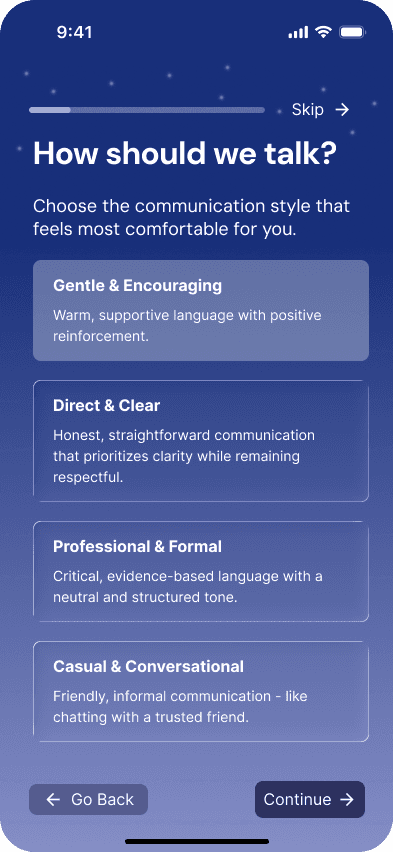
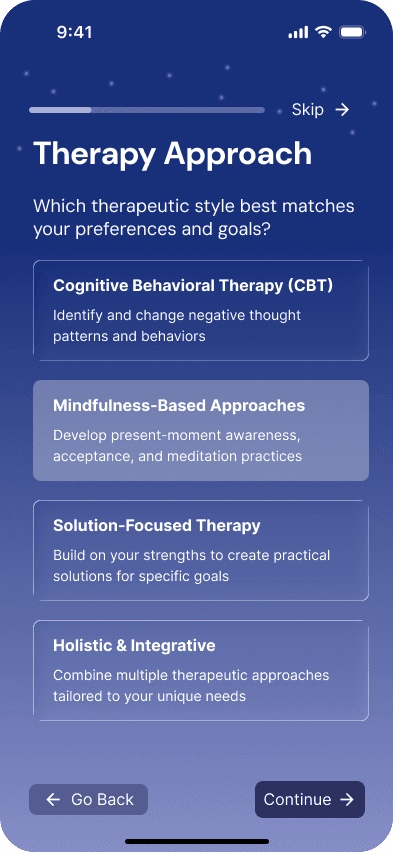
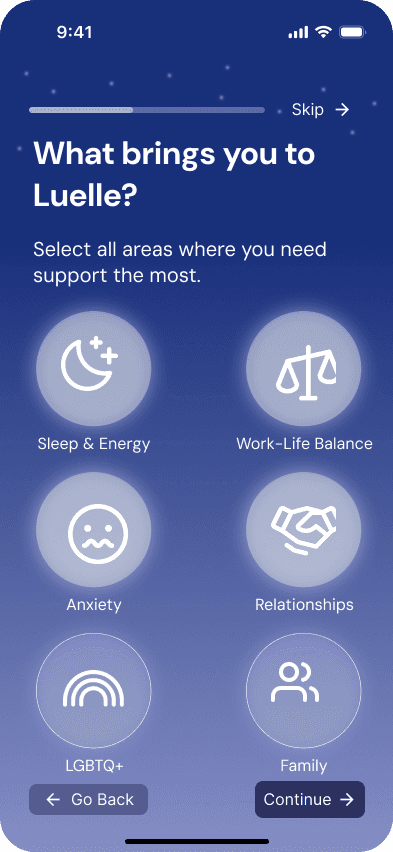
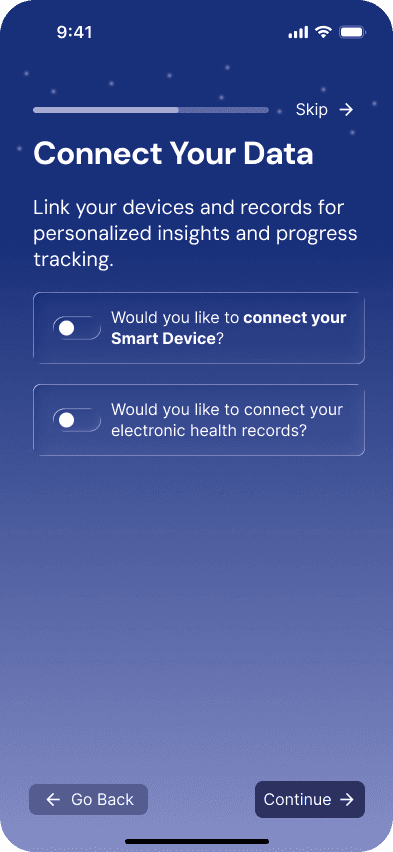
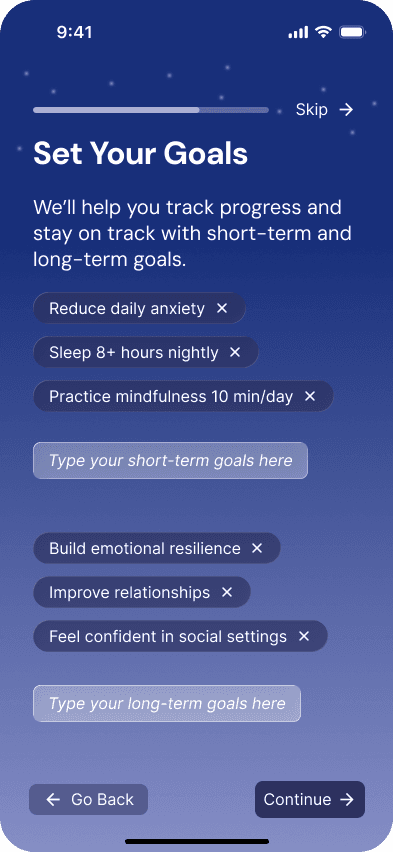
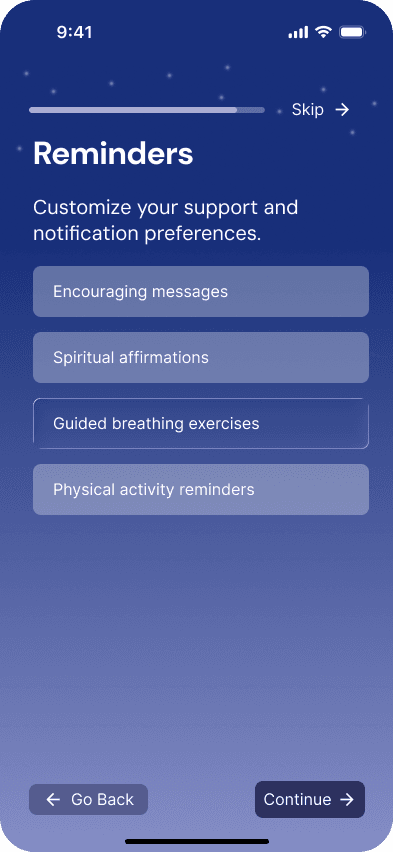
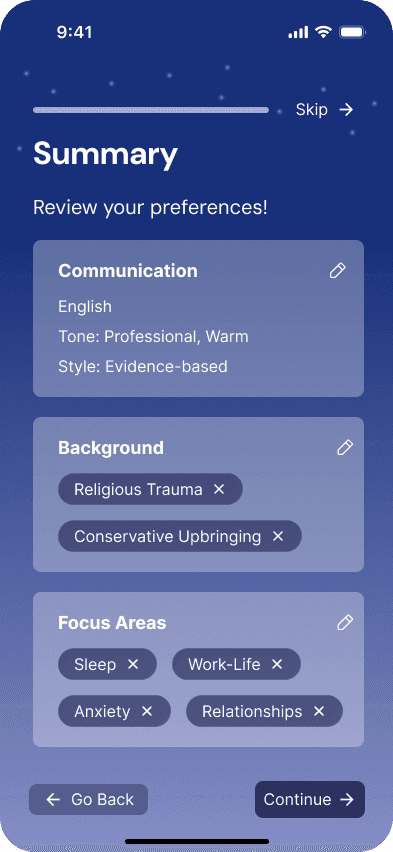
Progressive Onboarding
Gradually collect information so users see immediate value at each step.
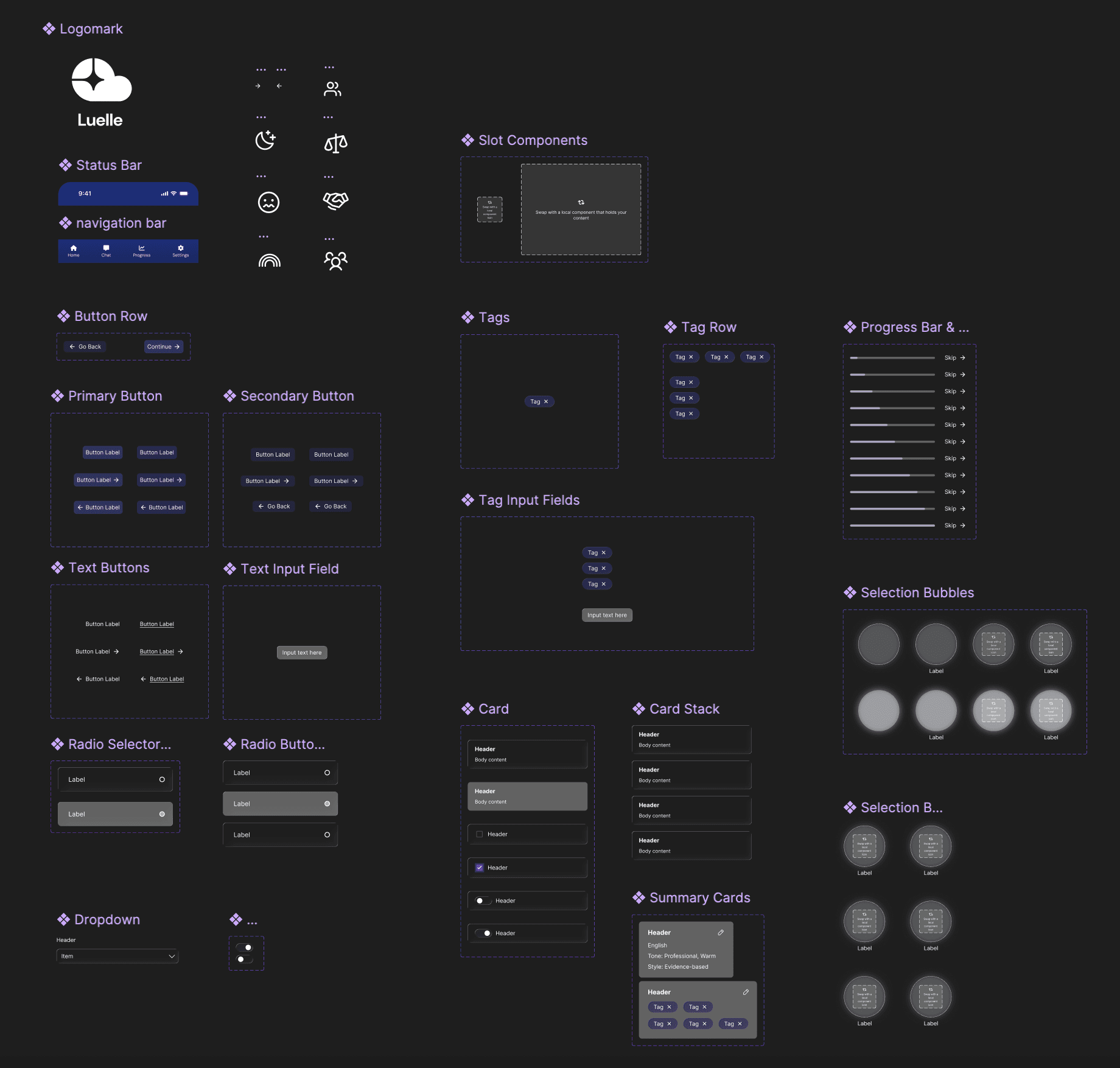
A comprehensive design system featuring a calming palette, and clear component states.